Pharmacists often see the practical barriers that stand between access to a medicine and successful treatment. The Arcera Life Sciences team considers how carefully governed partnerships can support adherence and education while protecting professional independence.

Caption: Pharmacy counseling helps patients connect treatment with daily life. AI-generated image.
A medicine can be available, affordable and correctly dispensed, yet still fail to deliver its intended benefit. The patient may be managing several medicines, may not understand when to take each dose, or may struggle to separate reliable health advice from the volume of information encountered online. For many people, the community pharmacy is where these practical difficulties become visible.
This places pharmacists in a distinctive position. They see how treatment fits into daily life and can identify confusion, missed doses, medicine-safety concerns and the need for referral. Industry can support that work, provided the partnership answers a genuine patient or professional need and protects the pharmacist’s independence.
Adherence support within pharmacy practice
One practical example is patient-specific adherence packaging for older people and others who manage complex chronic regimens. Medicines can be arranged by day and dosing time in twice-daily or four-times-daily blister packs, according to the patient’s prescription. A pharmacy-led service can make the regimen easier to follow and give the pharmacist a structured opportunity to counsel the patient or caregiver.
Arcera’s cross-functional team has explored a model in which independent pharmacies already serving elderly patients receive the packaging materials directly from an approved supplier. The pharmacist retains responsibility for the prescription, medicine reconciliation, packing and checking. Arcera’s support is limited to the materials and the governed program. It is not connected to a particular medicine, prescribing behavior, purchasing commitment or sales target.
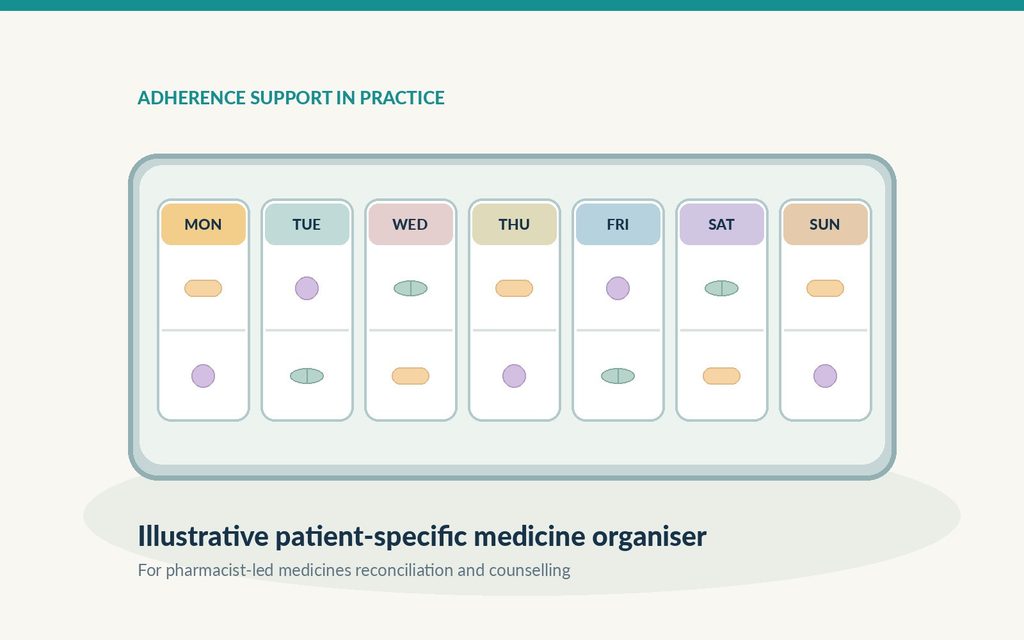
Caption: Illustrative adherence organizer. This does not depict an Arcera program or an actual patient’s regimen. AI-generated image.
The safeguards matter as much as the packaging. A sound program needs patient consent, privacy protection and a reliable process for medicine changes. It also needs a continuity plan so that a patient is not left without support if corporate funding ends. Feedback from pharmacists, patients and caregivers should guide any expansion. Future evaluation should look beyond the number of packs distributed and consider dispensing accuracy, reported adherence, patient understanding and the pharmacist’s experience of the service.

Caption: Illustrative pharmacy workflow. The pharmacist retains professional responsibility at every stage.
Education that pharmacy teams can use
Pharmacy staff work in an environment where learning must compete with dispensing, counseling, stock management and a continuous flow of patient questions. Long presentations have a place, but they do not always show whether the central message has been understood or can be applied in practice.
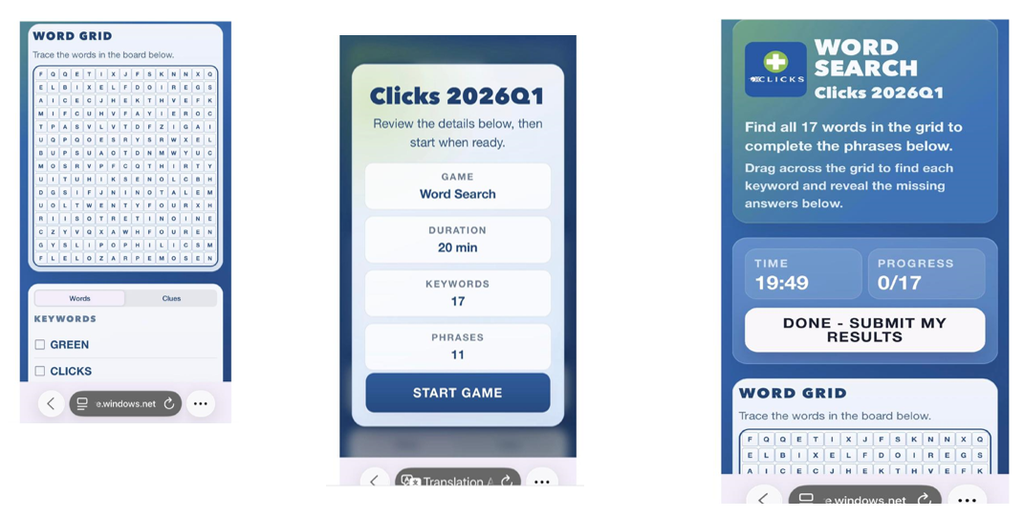
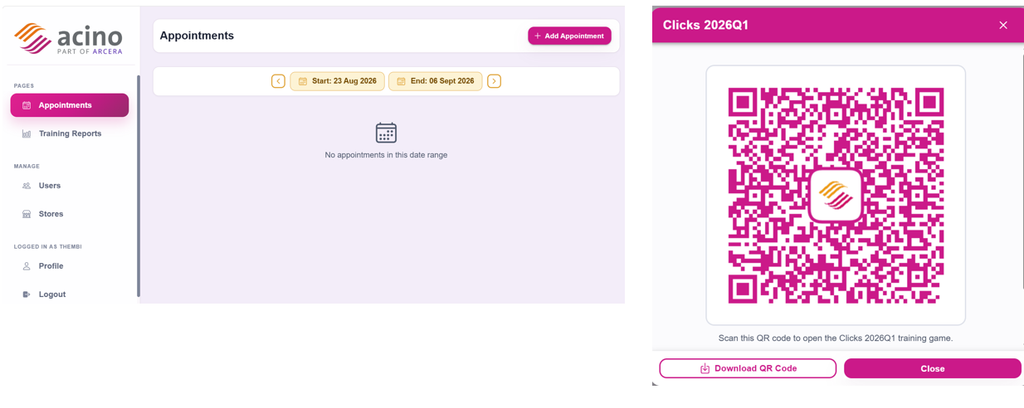
Short, gamified learning offers another option. Arcera’s pharmacy-facing teams have used a quiz-based application with pharmacy staff to test message retention after education. Immediate feedback identifies concepts that need to be explained again. Repeated, focused questions can also make refresher training less burdensome and help teams build confidence over time.

Caption: Shared learning gives pharmacy teams an opportunity to discuss and clarify knowledge. AI-generated image.
The content and incentives require careful design. Disease education, medicine safety, referral guidance and antimicrobial stewardship are suitable areas for this approach. The learning should never reward the recommendation of a particular product or turn an educational interaction into disguised promotion. The most useful measure is not how many people opened a quiz, but whether knowledge improved and remained available when a patient needed advice.

Caption: Learning and feedback cycle based on the approach described in this article.
Education beyond the pharmacy counter
The same principle applies to wider outreach. In 2025, Arcera recorded 417 scientific educational events across its regions, with 22,600 healthcare professional participants. The organization also recorded 27 disease or health awareness days and 29,266 patient or public engagements where such engagement was permitted. In total, the tracker recorded 58,389 external engagements. These figures describe activity and participation rather than unique individuals or clinical outcomes, but they show the potential scale of a coordinated education platform.
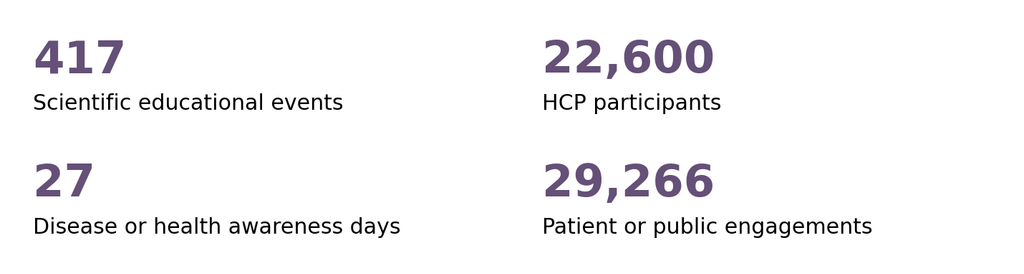
Caption: Arcera education and outreach activity in 2025. Source: Figures supplied in the article.
Participation and engagements do not represent unique individuals or clinical outcomes.
The portfolio covered gastroenterology, cardiovascular health, medicine safety and antimicrobial resistance. Digital activity included 13 social posts, which generated 51,595 impressions and 2,843 interactions, alongside one new educational webpage and seven updated pages. Again, impressions are not evidence of changed behavior. Their value lies in directing people to accurate, understandable information and clear routes for further advice or safety reporting.
As part of this education, Shakira Ramlakhan, our head of compliance and sustainability for Africa and healthcare and human rights lawyer, conducts ethics talks on topics relevant to ethical pharmacy practice, including responsible use of social media and artificial intelligence, patient confidentiality and the ethical considerations surrounding unregistered healthcare products. These talks offer ethics CPD points and count toward pharmacists’ continuous professional development, helping them apply ethical principles to decisions in everyday practice.
Pharmacists can help make this content useful. They know the questions patients ask, the misconceptions that persist and the language that works in a local community. Involving pharmacists early can improve educational materials and ensure that online awareness leads to an appropriate conversation, rather than diagnosis or treatment by social media.
We provide this education to be a trusted partner throughout the continuum of care, supporting pharmacists and other healthcare professionals in providing the best healthcare to the patient. This means sharing relevant knowledge, respecting professional judgement and keeping patient wellbeing at the center of our collaboration.
Antimicrobial resistance as a shared responsibility
Antimicrobial resistance illustrates why the relationship between education and practice matters. Public campaigns can explain why antibiotics should not be shared or saved for later, but pharmacists reinforce that advice at the point of care. They can counsel patients on correct use, identify safety concerns, respond to inappropriate requests and refer when further assessment is needed.
Industry can contribute educational resources and support dialogue across markets. Pharmacists and their professional bodies should help define the need, the content and the measures of success. An FIP roundtable could bring together community pharmacists, stewardship practitioners, patient representatives and industry to identify models that national associations can adapt to their own settings.

Caption: Pharmacist-led conversations reinforce safe medicine use and appropriate referral.
AI-generated image.
Conditions for trusted partnership
The changing role of pharmacy creates room for closer collaboration, but trust depends on clear boundaries. Useful partnerships begin with an identified patient or practice need. Pharmacists retain professional control. Funding and roles remain transparent. Education stays separate from product promotion, and evaluation distinguishes projected capacity from achieved reach and clinical benefit.
The best test is simple: Would the initiative still make sense if the company’s products were removed from the discussion? If the answer is yes, the partnership is more likely to strengthen pharmacy practice and serve patients fairly. That is the standard that industry and pharmacy should set together.
About this contribution
This article reflects the combined work of Arcera colleagues involved in pharmacy engagement, patient support, education, medical governance, sustainability and compliance. The initiatives described were developed and delivered through collaboration across functions and regions.
Editorial point of contact: Shakira Ramlakhan, head of compliance and sustainability for Africa, Arcera Life Sciences.